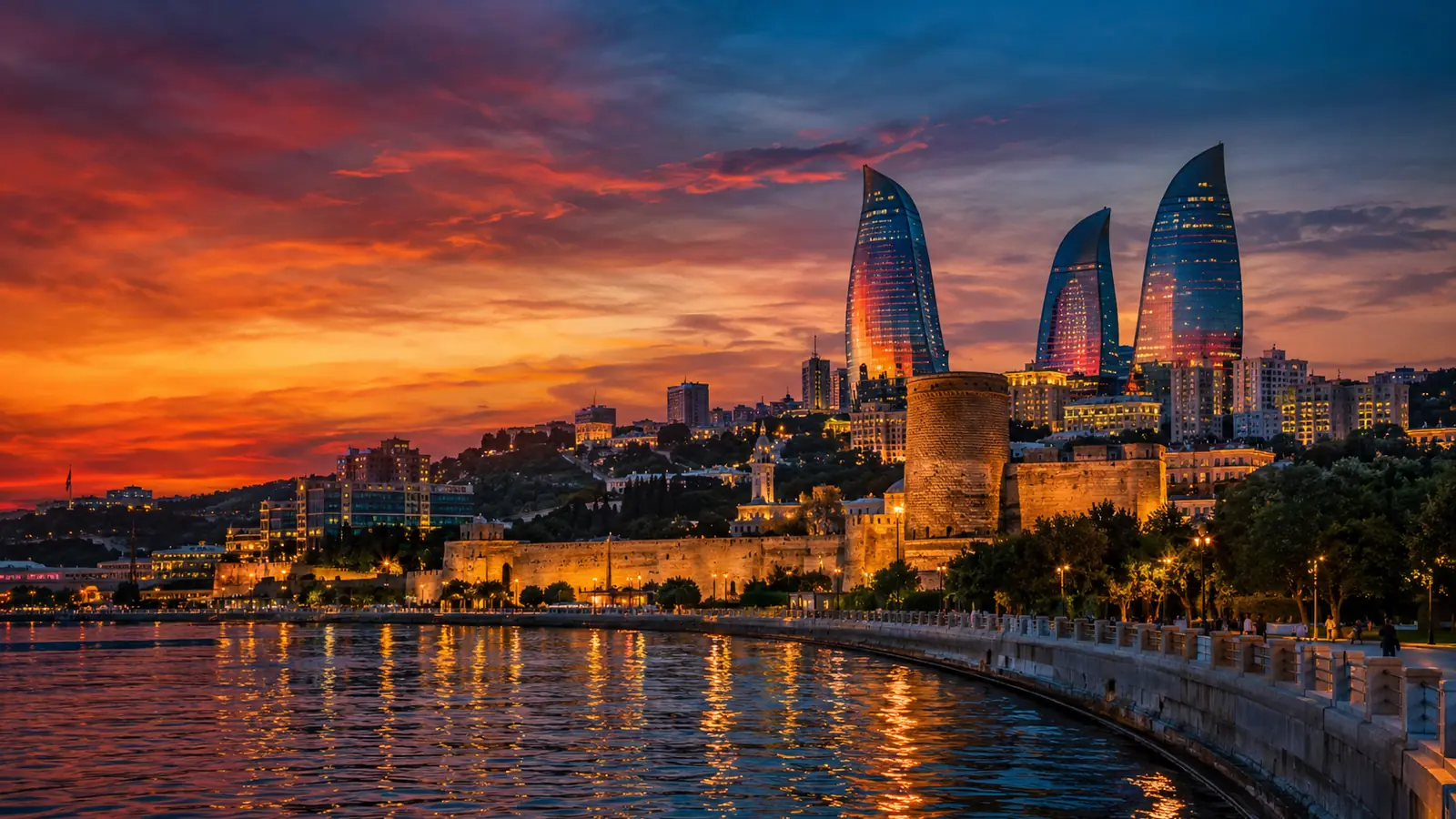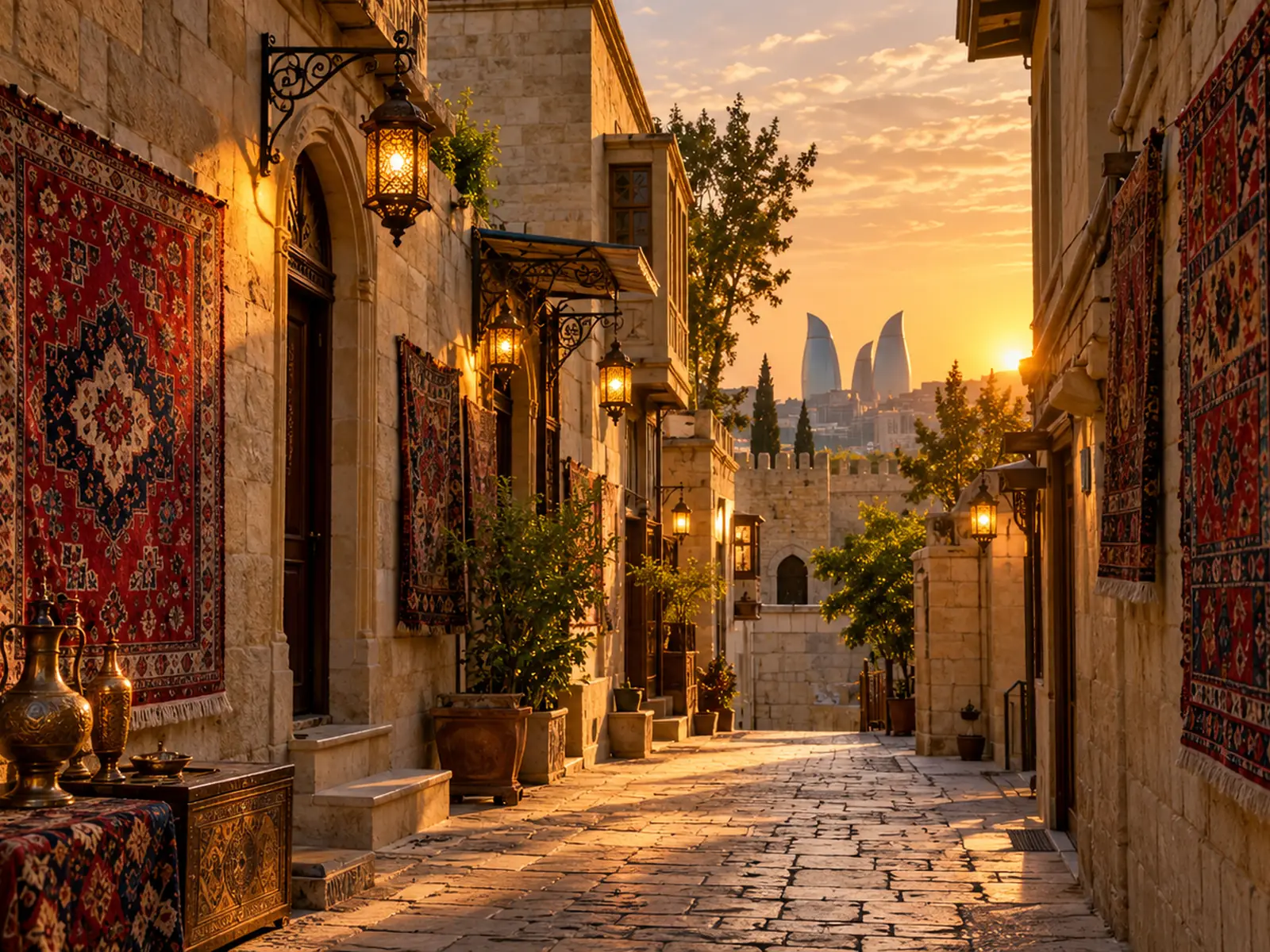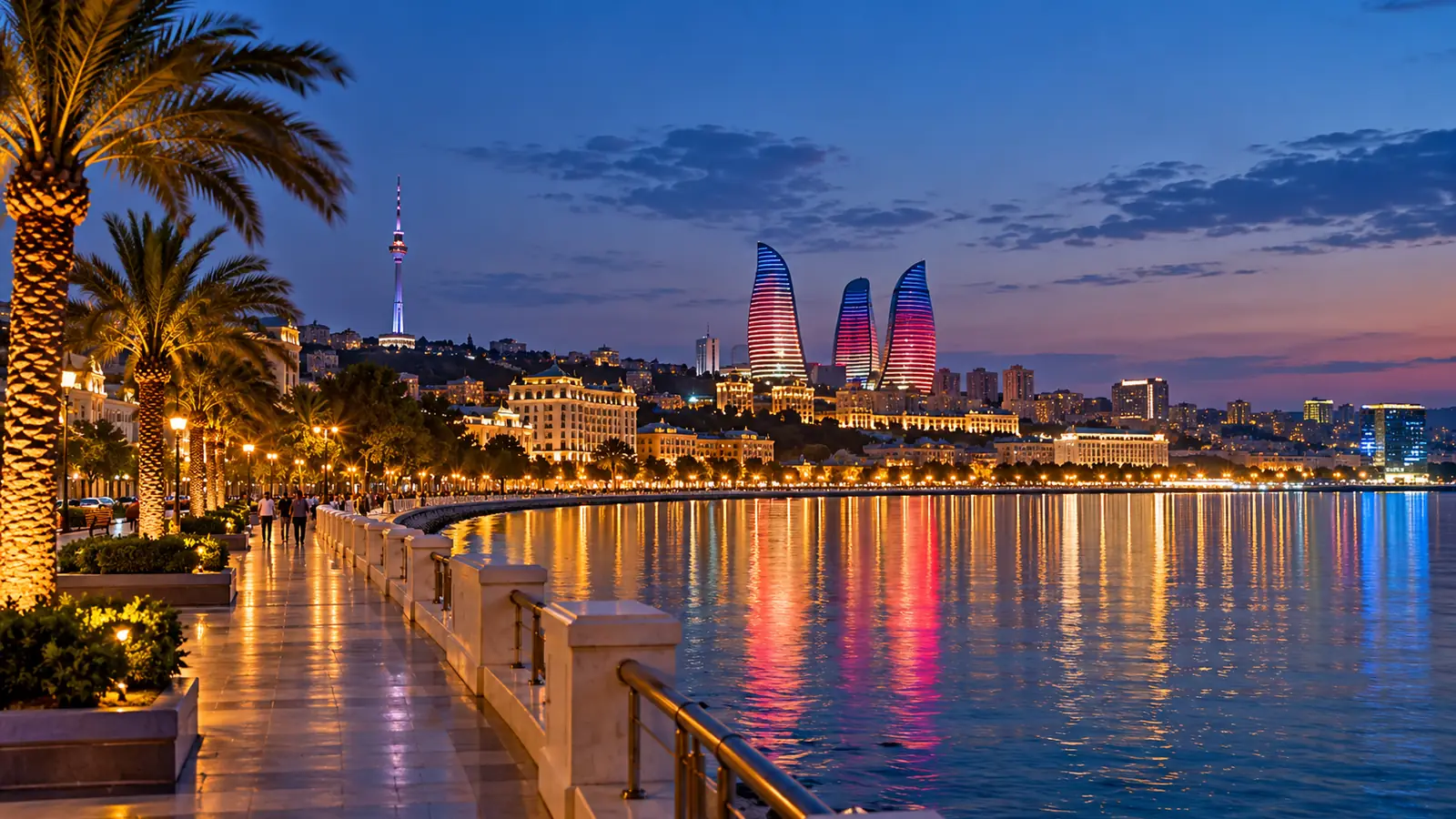
Baku sits on the western shore of the Caspian Sea, on the Absheron Peninsula, and its weather surprises many Pakistani travellers. It is not a desert city like Dubai, and it is not a mountain town like Murree. It is a windy, sunny, seaside capital with four clear seasons, a hot dry summer and a cool, grey winter. Knowing what each month brings helps you choose your dates, pack the right clothes and plan your Baku visa application at the right time.
All figures below come from the 1991–2020 climate normals for the Mashtaga weather station near Baku, as compiled from NOAA and other climate datasets and published in the Baku climate table on Wikipedia. These are long-term averages, not a forecast. Any single week can be warmer, colder or windier, so check a forecast a few days before you fly.
Baku climate in one paragraph
Baku has a cold semi-arid climate. Summers are warm to hot and fairly humid near the sea, but very dry, with almost no rain in July. Winters are cool rather than freezing on average, with occasional cold snaps and a few snowy days. Rain is light all year: the annual average is only about 274 mm. The defining feature is wind. Baku is nicknamed the "City of Winds", and the cold northern khazri and the warmer southern gilavar blow in every season.
Baku weather by month
The table shows the average daytime high, average night-time low and average monthly rainfall.
| Month | Avg high | Avg low | Rain | Feels like for a visitor |
|---|---|---|---|---|
| January | 7.3 °C | 2.9 °C | 32 mm | Cold, windy, grey; warm coat needed |
| February | 7.6 °C | 2.7 °C | 30 mm | Still winter; occasional snow |
| March | 10.9 °C | 4.6 °C | 18 mm | Cool, fresh; Novruz celebrations |
| April | 16.8 °C | 8.9 °C | 17 mm | Pleasant spring days, cool nights |
| May | 23.4 °C | 14.6 °C | 15 mm | Warm, sunny, ideal for walking |
| June | 28.0 °C | 19.7 °C | 9 mm | Summer begins; long sunny days |
| July | 30.5 °C | 22.9 °C | 4 mm | Hottest and driest month |
| August | 30.6 °C | 22.5 °C | 8 mm | Hot; sea breeze in the evening |
| September | 25.8 °C | 18.7 °C | 29 mm | Warm and comfortable |
| October | 19.5 °C | 13.2 °C | 33 mm | Mild autumn, a few rainy days |
| November | 13.4 °C | 8.4 °C | 44 mm | Cooler, the wettest month |
| December | 9.4 °C | 4.7 °C | 35 mm | Cold evenings, festive city lights |
Source: 1991–2020 climate normals, Mashtaga station (NOAA, Starlings Roost Weather), via Wikipedia.
Spring in Baku: March, April and May
Spring is one of the two best seasons to visit Baku. In March the city is still cool, with average highs around 11 °C, but it is also the month of Novruz, the spring new year, when streets fill with bonfires, wheat sprouts called samani and trays of sweet pastries. If you want to see Azerbaijani culture at its most festive, March is special, as long as you pack a warm jacket.
April warms up to an average high of about 17 °C, and May reaches around 23 °C, with very little rain. Walking the Old City, climbing the Maiden Tower and strolling the seaside Boulevard are comfortable all day. May is also a good month for day trips to Gobustan and the mud volcanoes, before the summer heat arrives. For Pakistani families, the Eid holidays sometimes fall in spring, which makes April and May popular for a short break.
Summer in Baku: June, July and August
Summer is hot and dry. July and August average daytime highs of about 30–31 °C and night-time lows around 22–23 °C. That is far milder than a Lahore or Karachi summer, which is one reason Baku is popular with Pakistani travellers in June and July. Rain is rare; July averages only about 4 mm. Sunshine is long, with more than 300 hours of sunshine on average in June and July.
The sea breeze helps, especially in the evening on the Boulevard. Midday sightseeing can still be tiring, so plan museums and indoor sights such as the Heydar Aliyev Center and the Carpet Museum for the afternoon, and walks for the morning and evening. Summer is also the best time for the mountains: Gabala and Shahdag in the north of the country are cooler and greener than the capital. Book early, because summer is peak season for hotels and flights.
Autumn in Baku: September, October and November
September is many people's favourite month in Baku. The average high is around 26 °C, the sea is still warm, and the summer crowds thin out. October cools to about 20 °C, with a few rainy days, and is excellent for sightseeing. The light over the Caspian in autumn is soft and golden, which photographers love.
November is the wettest month on average, at about 44 mm, and highs fall to around 13 °C. It is quieter and can be good value, but bring a waterproof jacket and expect wind.
Winter in Baku: December, January and February
Winter in Baku is cool and windy rather than extremely cold. Average highs are about 7–9 °C and lows around 3–5 °C. Snow does fall on a few days each winter, on average around ten days a year, but it usually melts within a few days. What makes winter feel colder than the numbers is the khazri wind, which can be strong and biting near the sea.
Winter has its own charm: fewer tourists, festive lights in December, and the chance to combine Baku with snow in the mountains. If you are going for a winter honeymoon, pack a proper coat, gloves and a hat, and plan indoor stops such as museums, malls and tea houses.
The wind: what Pakistani travellers should know
Baku's wind is famous. The northern khazri can be strong enough to make an umbrella useless and a light jacket feel thin, even in spring and autumn. In summer the same wind brings welcome relief from the heat. Practical advice:
- Pack a windproof layer in every season except high summer.
- Women who wear a dupatta or scarf may prefer one that can be pinned in place.
- Keep a hair tie, lip balm and sunglasses in your bag; the wind can carry dust.
- Plan outdoor viewpoints, such as Highland Park above the city, for calmer days.
Sea, sunshine and daylight
Long summer days are one of Baku's quiet pleasures. Average sunshine climbs from under 80 hours in January to over 300 hours in June and July, so summer evenings stay bright and long, ideal for a late walk on the Boulevard. The Caspian is also at its warmest in late summer, and many families enjoy the beaches on the Absheron Peninsula outside the city in July and August. In winter, daylight is short and the sky is often grey, so plan indoor sights for the afternoon. Humidity is fairly high near the sea all year, which can make summer heat feel stickier and winter wind feel colder than the thermometer suggests.
So, what is the best time to visit Baku?
For most Pakistani travellers, the best time to visit Baku is late April to early June and September to mid-October. These months offer mild to warm temperatures, little rain and long sunny days, ideal for walking the Old City, the Boulevard and day trips.
- Best for families: May, June and September, with warm weather and long days.
- Best for culture: March, for Novruz celebrations.
- Best for mountains: June to August, when Gabala and Shahdag are cool and green.
- Best for quiet and value: November and February, if you do not mind cool weather.
- Best for snow: December to February in the mountain resorts.
Plan your visa around the season
Whatever season you choose, the visa comes first. Pakistani passport holders need an Azerbaijan visa before travel. According to the official e-visa portal, a standard e-visa is issued within 3 working days and an urgent e-visa within 3 hours. In peak months it makes sense to apply as soon as your flights are booked, so there is no last-minute stress. Read our Azerbaijan e-visa guide for the full process, or let our team prepare your application and plan your Baku tour around the best weather for your dates.